

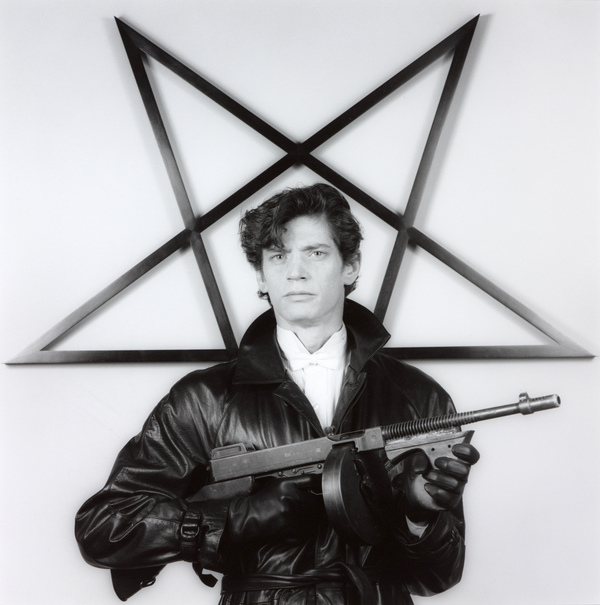
Let’s jump into the world of one of the most talked-about photographers of the 20th century, Robert Mapplethorpe! You may have heard his name associated with striking and controversial black-and-white images. Whether it’s delicate flowers or bold homoerotic art, Mapplethorpe knew how to grab your attention and hold onto it. His work was not just about capturing images but challenging norms and pushing boundaries. So, buckle up and get ready to explore his fascinating life, iconic works, and lasting influence.
Early Life and Education
Here’s the thing: Robert Mapplethorpe wasn’t always behind a camera! Born in Floral Park, Queens, New York, he grew up in a typical suburban setting as one of six kids. Who would have thought this environment would nurture such a bold creative vision?
Mapplethorpe headed off to the Pratt Institute in New York City, where he initially dove into graphic arts instead of photography. During these years, he played with various art forms like drawing and sculpting, heavily influenced by avant-garde icons like Joseph Cornell and Marcel Duchamp. Imagine a young Mapplethorpe piecing together mixed-media collages, blending paint with provocative images from magazines—it’s almost like seeing the seeds of his future work sprouting before our eyes!
Start of a Storied Career
And then came the 1970s! Mapplethorpe picked up a Polaroid camera and started snapping away, diving into photography with the zest of a kid in a candy store. His first solo exhibition, simply named *Polaroids*, was showcased at the Light Gallery in New York. This was the moment when the art world took notice.
His path was truly underway when he crossed paths with curator Sam Wagstaff in 1972. Wagstaff wasn’t just a mentor; he became a close companion and a critical support system for Mapplethorpe. It was thanks to Wagstaff that Mapplethorpe got his hands on a Hasselblad medium-format camera—a game-changer for his career. It was the start of his meticulously crafted images, featuring friends, artists, and even the New York S&M underground scene.
Unique Style and Subjects
Let’s say you’re flipping through Mapplethorpe’s portfolio. What might catch your eye first? It would probably be his use of precise lighting and classical composition, shaping each photo like a sculpture of its own. He had a knack for treating his subjects with an almost reverent coolness, whether it was a celebrity portrait or a still life of a flower. Picture seeing muscular male nudes photographed with such attention to detail that it challenges your perception of art versus explicitness.
His work spanned diverse subjects:
- Still lifes and flowers: Captured with the serene coolness of a Vermeer painting.
- Portraits of icons: Like Patti Smith and bodybuilder Lisa Lyon, with whom he produced a book.
- Male nudes with BDSM themes: Provocative and challenging, questioning boundaries and definitions.
Major Works and High-Profile Exhibitions
You’ve probably heard of some of his published books and seen his work in high-profile exhibitions. His photographs were more than just pictures; they were parts of major art collections and cultural discussions.
Some of his standout creations include:
Books: Robert Mapplethorpe Photographs, Certain People, and The Black Book, which became notable for their portrayal of black men, stirring conversations about race and representation.
Exhibitions: His work was celebrated in spaces like the Whitney Museum and documenta exhibitions, not to mention a comprehensive retrospective that cemented his status in the art world.
Album covers and set designs He even dipped his toes in music, creating album covers for Patti Smith and Television and designing dance sets, proving that his artistic reach was wide.
Challenges and Triumphs
Mapplethorpe’s life wasn’t all roses. In 1986, he was diagnosed with AIDS during a time when the disease was massively stigmatized. Instead of retreating, he faced his challenges head-on. It sparked the creation of the Robert Mapplethorpe Foundation in 1988, aimed at promoting photography and backing AIDS research. It was his way of fighting back and ensuring that his legacy continued to make a difference.
Enduring Influence and Legacy
Fast forward to today and Mapplethorpe’s work is still in the spotlight—and for good reason! He continues to be a touchstone in discussions about art, representation, and censorship. His pieces are still shown around the world, and publications like *Pictures* offer fresh perspectives on his work, ensuring new generations get to experience his genius.
His art is nothing short of a conversation starter, challenging you to ask questions and maybe even reconsider what you thought you knew about photography. Whether he’s documented as a pioneer of controversial art or lauded for his mastery in visual composition, Mapplethorpe left a mark that refuses to fade.
If you’re keen to explore more groundbreaking artworks and their stories, there’s much to uncover in the world of art and creativity. Check this out, where you can dive into diverse industries and innovative ideas that are shaping our world today. Who knows, maybe the next Mapplethorpe is out there, ready to redefine art as we know it.
Also Read:
